
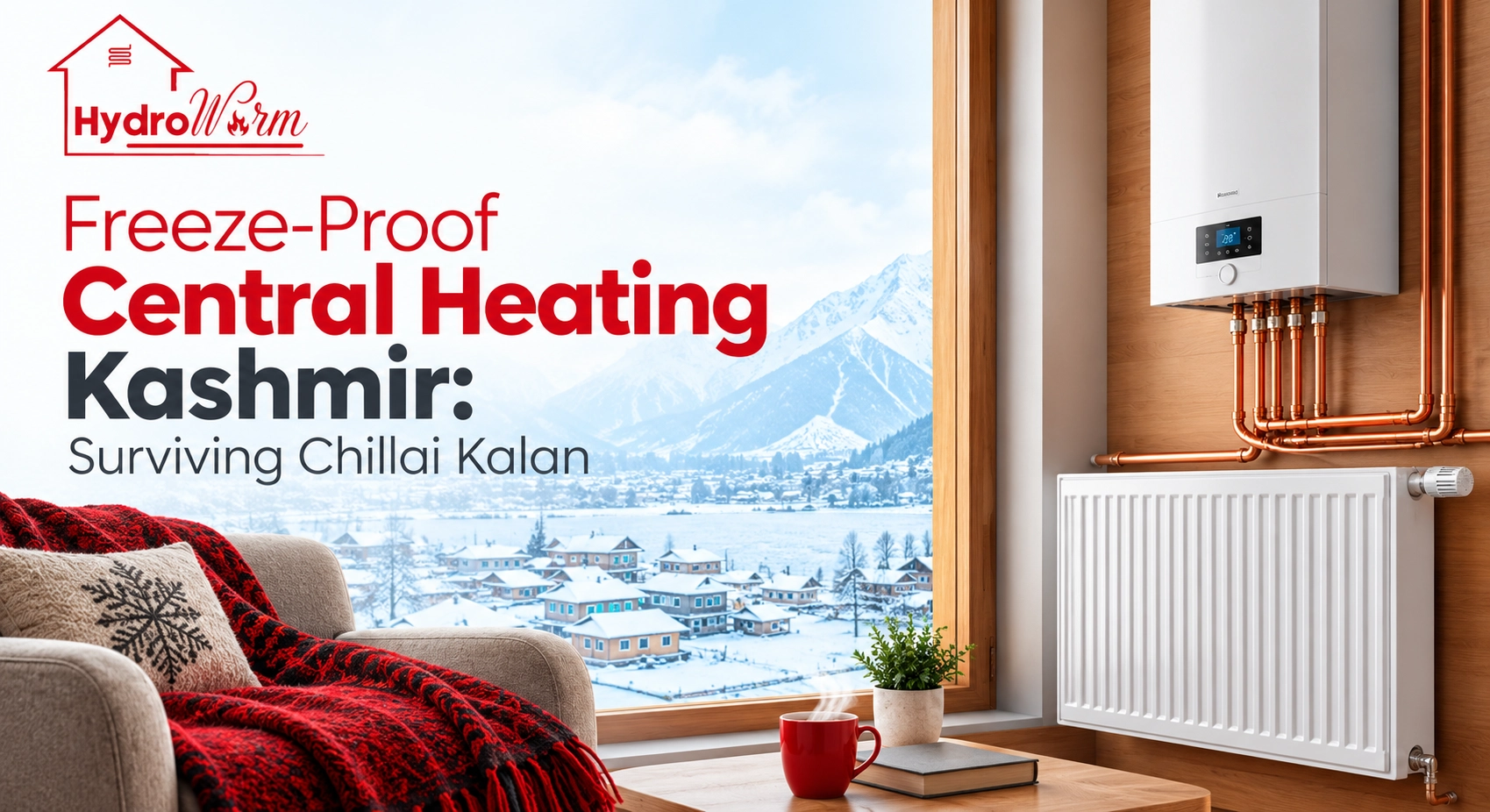
Freeze-Proof Central Heating Kashmir: Surviving Chillai Kalan
I. Introduction: Freeze-Proof Central Heating Kashmir
During the Chillai Kalan period (i.e., when the weather becomes extremely cold) across the Himalayan Region, temperature ranges from -10°C to -25°C.
In such cold climatic condition, there’s always chances of finding dry taps, frozen radiators, and hearing a scary crackling noise caused by the expansion of freezing water inside your radiator pipes. So what do you do? Your water-filled system will definitely break down during such harsh cold because of the natural phenomenon where liquid water expands once it turns into ice. This creates a hydraulic press effect with the trapped fluid, ultimately causing damages to your precious steel fittings, copper lines, etc.
So if you are planning to set-up an efficient central heating system at your home located within the high altitude zones of the state like Jammu and Kashmir and Ladakh, I would suggest going with this ‘Freeze-proof Central Heating System Kashmir Solution’. We highly recommend using glycol-based hydronic heating instead of the standard water-based system because of the extreme low-temperature climate prevailing here in Kashmir Valley.
Get to know about the types of central heating system for your home in this complete guide.
II. The Core Threat: Why Standard Heating Fails During Chillai Kalan
Water possesses a unique physical trait that turns destructive during a severe winter. As liquid water cools below 4°C, it begins to expand, and by the time it crystallizes into solid ice, its volume increases by roughly 9 percent. Inside closed radiator loops or underfloor heating circuits, this expanding ice creates immense internal pressure.
[ Water Drops Below 0°C ] ➔ [ 9% Volume Expansion ] ➔ [ Extreme Internal Hydraulic Pressure ] ➔ [ Pipe Failure / Boiler Rupture ]
Winter grid power in Kashmir and Ladakh collapses right when heat demand peaks. Frequent load-shedding and unscheduled power outages stop circulation pumps completely. Stagnant water inside uninsulated external conduits freezes within hours during a typical Chillai Kalan night.
Traditional Kashmiri architecture with its beautiful timber frameworks, open high-ceiling spaces, and cold sub-floors presents unique structural challenges. While traditional hamams offer localized warmth, heating an entire multi-story residence requires specialized, resilient hydronic designs that withstand freezing drafts without cracking hidden sub-floor plumbing.
III. How Polypropylene Glycol Protects Your System Down to -25°C
I want you to be aware that many homeowners conflate “industrial” antifreeze with residential heat transfer fluid. There’s no reason for anyone to ever mix ethylene glycol in their home — this stuff is highly toxic. If your heat exchanger leaks (and they do), the ethylene glycol can cause severe harm to both humans and pets alike. That’s why we exclusively utilize food grade polypropylene glycol today which offers unparalleled freeze protection without sacrificing safety from a health perspective.
When mixed with water, hydrogen bonds formed between these molecules which form rigid ice crystal structures get disrupted. Instead of expanding outward to create potentially damaging pressures on the inner wall of pipes, they create a soft slurry-like mixture composed mostly of polypropylene glycol.
| Fluid Parameter | Plain Water | 40% Polypropylene Glycol Mix | 50% Polypropylene Glycol Mix |
|---|---|---|---|
| Freezing Point | 0°C | -21°C | -33°C |
| Burst Protection | None (Fails at 0°C) | Down to -45°C | Down to -55°C |
| Toxicity Level | None | Non-toxic (Food-Grade) | Non-toxic (Food-Grade) |
| Corrosion Inhibitors | Absent | Present in premium mixes | Present in premium mixes |
Premium heat transfer fluids include specialized chemical inhibitors that prevent rust formations inside the boiler, manifold and pump impeller.
Do you want Dual Cooliing! Discover How Air-to-Water Heat Pump works to provide hot and cold functions for your home.
IV. Anti-Freeze Auto-Circulation: Smart Defense Against Frozen Loops
When we talk about anti-freeze auto-circulation protocols – modern hydronic controllers implement smart microcirculation programs that start automatically whenever ambient temperature dips below 4C degrees.
Instead of waiting for frozen loops to break because someone forgot to turn on the main burner, intelligent thermal control units cycle the heated fluid through external loops continuously.
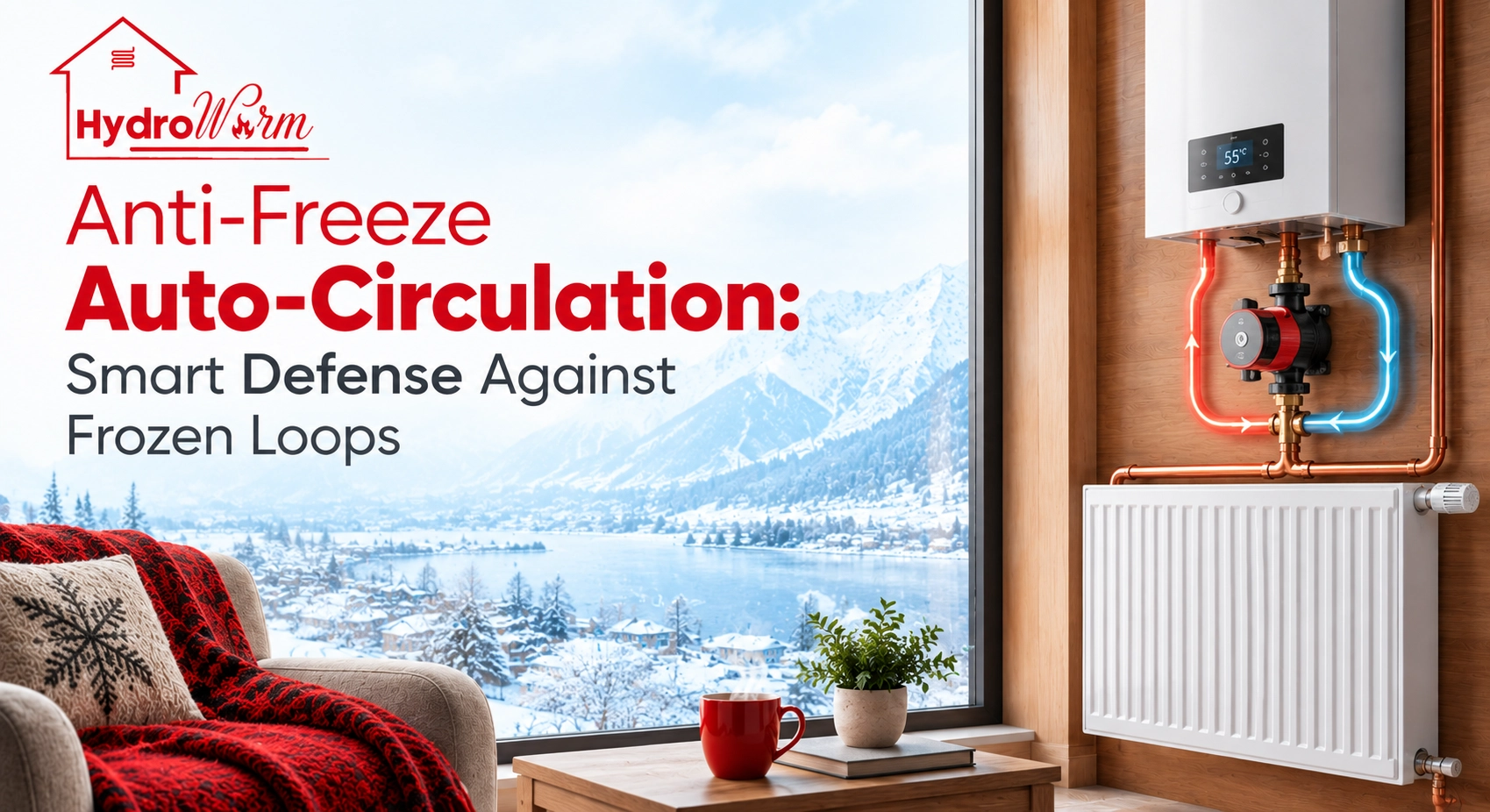
These auto-circulation cycles consume far less electrical current than typical AC cooling units which means small backup batteries suffice to keep things running safely until power returns.
And best of all? These clever little circulators work perfectly fine with just five-minutes-per-hour movement through warm interior zones.
V. Pipe Selection: Why PEX-a Oxygen Barrier Tubing is Essential
Last but not least – selecting proper pipe materials is also critical when designing your personal anti-freeze plan. Don’t get me wrong here folks – installing metal piping isn’t going anywhere anytime soon either…
Traditional rigid metal pipes don’t hold up very well under extreme thermal changes though leading many contractors opting for flexible PEX-a Oxygen barrier tubings instead nowadays.
If you are confused between radiator and underfloor heating, check out this easy guide.
VI. Battery Backup & Power Outage Protocols
Given that there’s prolonged load shedding across Kashmir this winter – coupled with severe weather conditions impacting Leh/Kargil regions… Yeah, nobody wants their whole hydronic system dependent solely upon uninterrupted grid power now do they?
Good news however – hydronic systems actually don’t require large quantities of electricity to function properly thanks largely due their reliance primarily upon low wattage circulation pumps rather than anything else!
By connecting those efficient DC-driven pumps onto whatever basic inverters/batteries/solar setups you’ve already got lying around… You’ll guarantee consistent flow of your precious heat transfer fluid despite all manner black outs occurring within Ladakhi valleys come wintertime.
In particular for high altitude off-grid situations common among folks living atop majestic mountains across Ladakh region – experts suggest incorporating some sort thermal buffer tank along-side gravitational loop designs helps maximize efficiency output whilst minimizing chances encountering sudden power loss incidents altogether…
VII. Conclusion
The great news here being investing time money resources into hiring professional quality hydronics heating engineers who know what needs doing comes pre-chillai-kalan season checks definitely pays dividends long term seeing how much headaches avoided thereafter… Much better personally would say heading into new season armed knowledge compared constantly dealing mess resulting neglectful actions caused ignorance… I mean seriously? What happens when cold snap hits hardest ever seen since ancient times folks??
Let me tell ya tales… Burst pipes! Big ones filled full hot liquids scalding burns worst yet expensive repair charges slapped everyone’s face coming months afterwards!
Don’t wanna risk any unpleasant surprises myself especially given crazy climate trends lately affecting our beloved country India – let alone its borderlands…
But hey! At least one thing remains certain forevermore – anyone wanting stay cozy warm comfy vibes come whichever winds blow shall surely benefit immensely by contacting local hydronic heating gurus ASAP! They’ll conduct complete assessment ensuring everything working top notch ready welcoming embrace Chillai kalans…
Still curious though? Check out these frequently asked questions below concerning all things related chilling out comfortably cozy!
Ready to Freeze-Proof Your Central Heating System?
Get in touch with Hydrowarm engineers today for complete site evaluation, glycol fluid testing, and customized anti-freeze heating designs for your Kashmir or Ladakh home.
Get Free Consultation


