

How Air-to-Water Heatpump Cooling Srinagar Provide Dual Heating
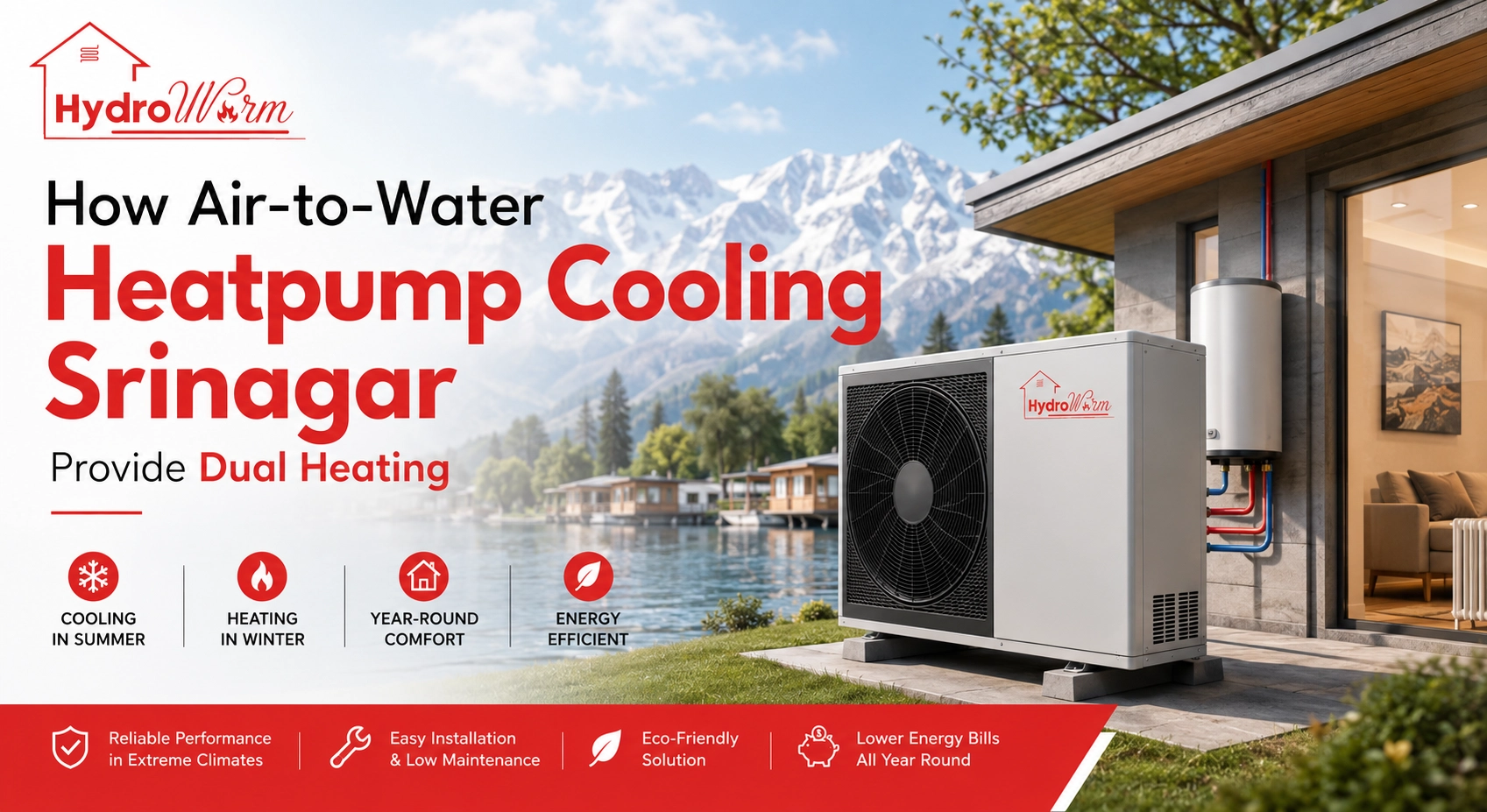
The summer of Srinagar can’t match up with what it was just a decade ago anymore. When you step into your home during July or August, chances are high that the temperature will have climbed above 32°C and by this time of year could easily touch 35°C. To keep cool in Kashmir today means having good cooling system options for your home as well. This blog will illuminate you about how air-to-water heat pump cooling Srinagar works.
Most of us would agree that our winters call for extra heat while summers require extra cool. However most people in the Valley think that using their Central Hydronic system makes sense only if there’s snow on top of their roofs. It is pure myth.
Integrating the modern, reversible Air-to-Water Heat Pump with high-efficiency Fans Coil Unit’s (FCU), companies such as Hydrowarm have been able to transform traditional winter only set ups to full year round Climate Control Systems.
If you are confused between underfloor and radiator heating systems, check out this blog on Radiators or Underfloor? Best Heating System for Kashmir (Hydronic).
How Air-to-Water Heat Pump Cooling Srinagar Work Year-Round
The operation of an air-to-water heat pump can be explained with basic thermodynamics principles. It essentially works by moving thermal energy between the outdoor environment and our living spaces thanks to its unique design that includes a reversible valve allowing it to run either in heating or in cooling mode depending on seasonal requirements.
When running in the winter mode, this device will suck up all that ambient heat out there - even if you have some seriously cold outdoor air (-15°C+/-), this thing will still manage to generate some nice warm water (usually at 45°C-55°C) which gets circulated via underfloor heating loops & fan coil units (FCUs). On the flip side during summers, once the switching valve has reversed itself, everything just gets flipped inside-out; instead of generating heat we are now removing it from indoors while simultaneously circulating some really nice chilly stuff (between 7°C-12°C usually) back onto our indoor FCU coils for quick effective cool-downs!
During harsh winters experienced in places like Kashmir where outdoors temperatures plummet down dangerously low but still want warmth inside one’s home during such times these devices do exactly what they promise too i.e., pull all those ambient bits-of-warmth floating about freely just outside then transfer them over to whatever medium currently holds/holds-on-to said waters…be that water going round under floorings or simply held within fans coil unit coils! As sooners come along folks just need remember though reverse their valves accordingly so things don’t go haywire.
Modern systems are able to simultaneously manage Domestic Hot Water (DHW) production. As they cool your bedroom, these units redirect their rejected heat to replenish hot water for you bathroom and kitchen tanks all while saving large amounts of electricity during the summer months.
The Vital Role of Fan Coil Units (FCUs)
A Fan Coil Unit acts as the heat exchanger inside your room. It consists of a multi-speed fan and a hydronic coil connected directly to the heat pump. As chilled water moves through the coil the fan pulls warm indoor air across it cooling the room efficiently without refrigerant lines running through your living space.
- Wall-Mounted Fan Coil Units: Similar to classic split air conditioners, these wall mounted fan coil systems make an excellent retrofit solution.
- Ceiling Concealed Fan Coil Units: These units hide under your false ceilings for superior cool/heating distribution with no visual interference with your seamless interior aesthetics.
- Hydronic Cassettes (Four Way Flow): Flush mounted fan coils spread cool/heating evenly over big living areas of residential/commercial buildings.
Why Underfloor Cooling Needs FCUs: Running chilled water into your radiant floor pipes will bring down your floor temps to below the dew point of your room air. So you get condensation forming up on your tile/timber floors with really slick surfaces which could lead to water damage. FCUs capture all that condensation and drain it safely away from inside your home.
Also Check out Best Heat Pump in Kashmir – Modern Heating System for Homes.
Heat Pumps vs. Traditional Split Air Conditioners
Installing individual split air conditioners across a three-story house in Srinagar creates massive energy draw and ruins exterior aesthetics.
| Feature | Air-to-Water Heat Pump + FCUs | Multi-Split AC Systems |
|---|---|---|
| Outdoor Units | Single central heat pump unit | 4-6 separate compressors hanging on walls |
| Functionality | Winter heating + Summer cooling + Hot water | Summer cooling only (or inefficient heating) |
| Energy Source | Hydronic water loop distribution | Multiple independent refrigerant lines |
| Aesthetic Footprint | Clean exterior and concealed ceiling profiles | Cluttered building facades |
| Maintenance | Single equipment hub service point | Multiple separate units requiring service |
Planning & Budgeting for Kashmir Homes

The ideal time for laying (Air-to-Water Heat Pump Cooling Srinagar) out a central hydronic network is during initial building construction or structural renovation.Routing insulated PEX and copper pipes early avoids breaking finished walls later.
Market rates for quality 1.5-Ton to 2-Ton FCU units range depending on the mounting style:
- Wall-Mounted Units: ₹28,000 – ₹38,000 per unit
- Ceiling Concealed / Ductable FCUs: ₹35,000 – ₹48,000 per unit
- 4-Way Hydronic Cassettes: ₹45,000 – ₹62,000 per unit
While initial setup costs higher than buying cheap window units, long-term ROI is substantial. Consolidating home cooling, underfloor winter heating and domestic water heating into one system cuts monthly electricity bills significantly compared to running independent heating coils, ACs and electric geysers.
Investing in an air-to-water heat pump setup ensures your home stays energy-efficient through sub-zero winter nights and hot summer afternoons alike. Hydrowarm offers comprehensive site design German-engineered heat pump integration and local technical expertise tailored to the unique climate conditions of Kashmir and Ladakh.
Further, you can compare different types of central heating for your home in this sophisticated guide.
Conclusion
Central hydronic HVAC systems are no longer just for surviving harsh winters—they represent a complete, year-round home comfort investment for modern living. Hydrowarm provides end-to-end site design, German-engineered heat pump integration, and regional installation expertise tailored specifically to the climate conditions across Kashmir and Ladakh.
Planning your home build in Srinagar? Contact Hydrowarm today for a free heat-load calculation and custom central HVAC layout plan.


