
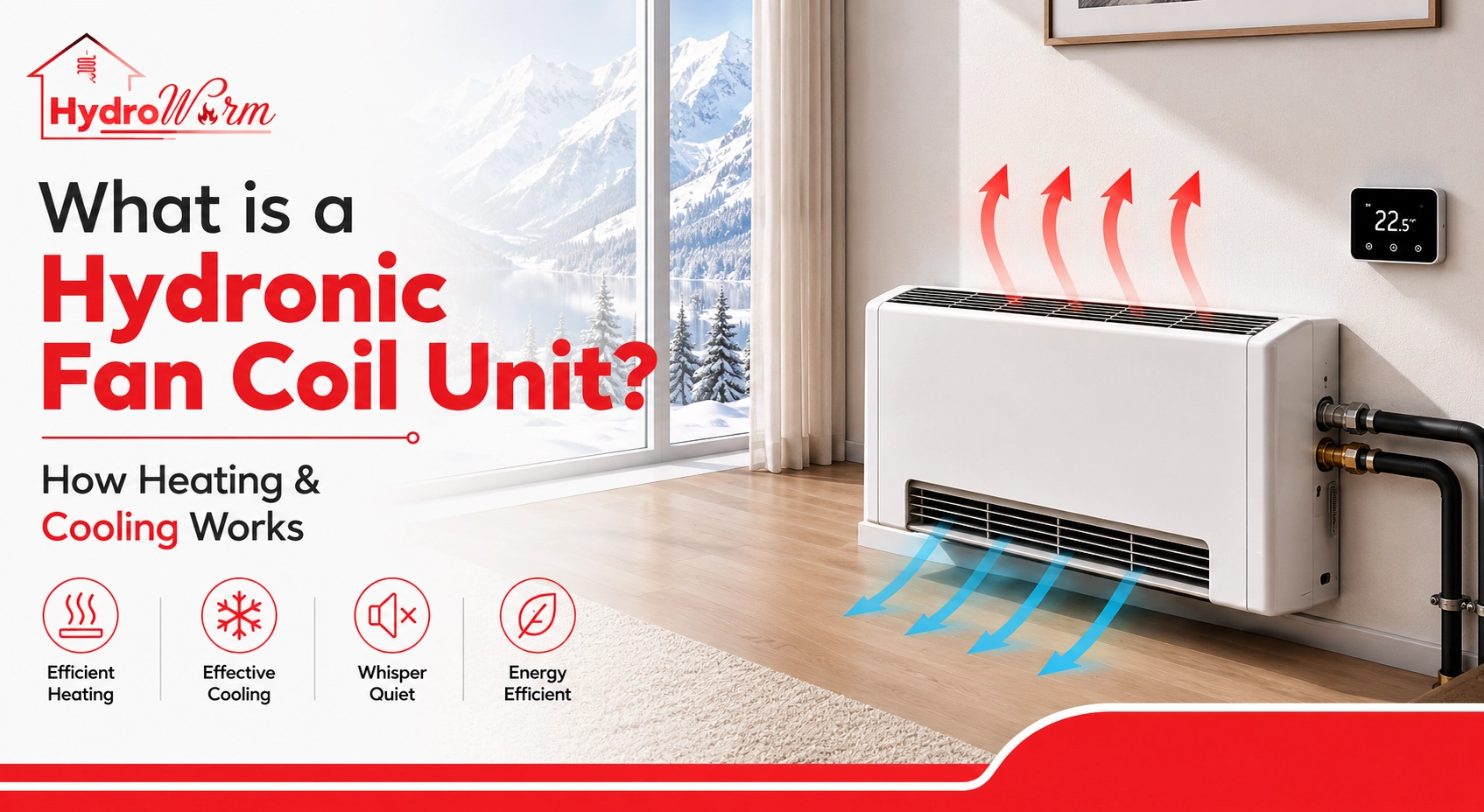
What is a Hydronic Fan Coil Unit? How Heating & Cooling Works
1. Introduction
Today’s ever-evolving world sees the need for modern homes to embrace sustainable design while maintaining low carbon footprints. As such, homeowners and architects are seeking innovative, eco-friendly solutions for optimal indoor temperature control without sacrificing comfort. This article introduces you to one of the most revolutionary advancements in modern climate control technology — the Hydronic Fan Coil Unit (FCU).
With today's evolving global awareness around environmental responsibility and sustainability, the use of conventional energy-hungry HVAC systems has become obsolete. Decades ago, North American homeowners achieved residential climate control by using traditional forced-air furnaces, massive bulk ducting systems or even high-pressure refrigerant systems.
But what if we could switch out those elements for an ultra-efficient system? Enter the hydronic fan coil unit! By leveraging the unique properties of water instead of air/chemical refrigerant-based mediums to facilitate primary thermal transfer operations within cooling/heating systems, we’re able to deliver unparalleled levels of energy efficiency, total silence, and compatibility with any number of high-end architectural style paradigms.
You may also check this guide about How Pellet Boilers Work?
2. What is a Hydronic Fan Coil Unit and How Does It Work?
Basic Mechanism
What Is a Hydronic Fan Coil Unit?
A hydronic fan coil unit is a compact terminal device
designed to regulate indoor temperatures by transferring
thermal energy between a building's air supply and a loop of
water flowing internally within the unit. These units
operate on three basic principles:
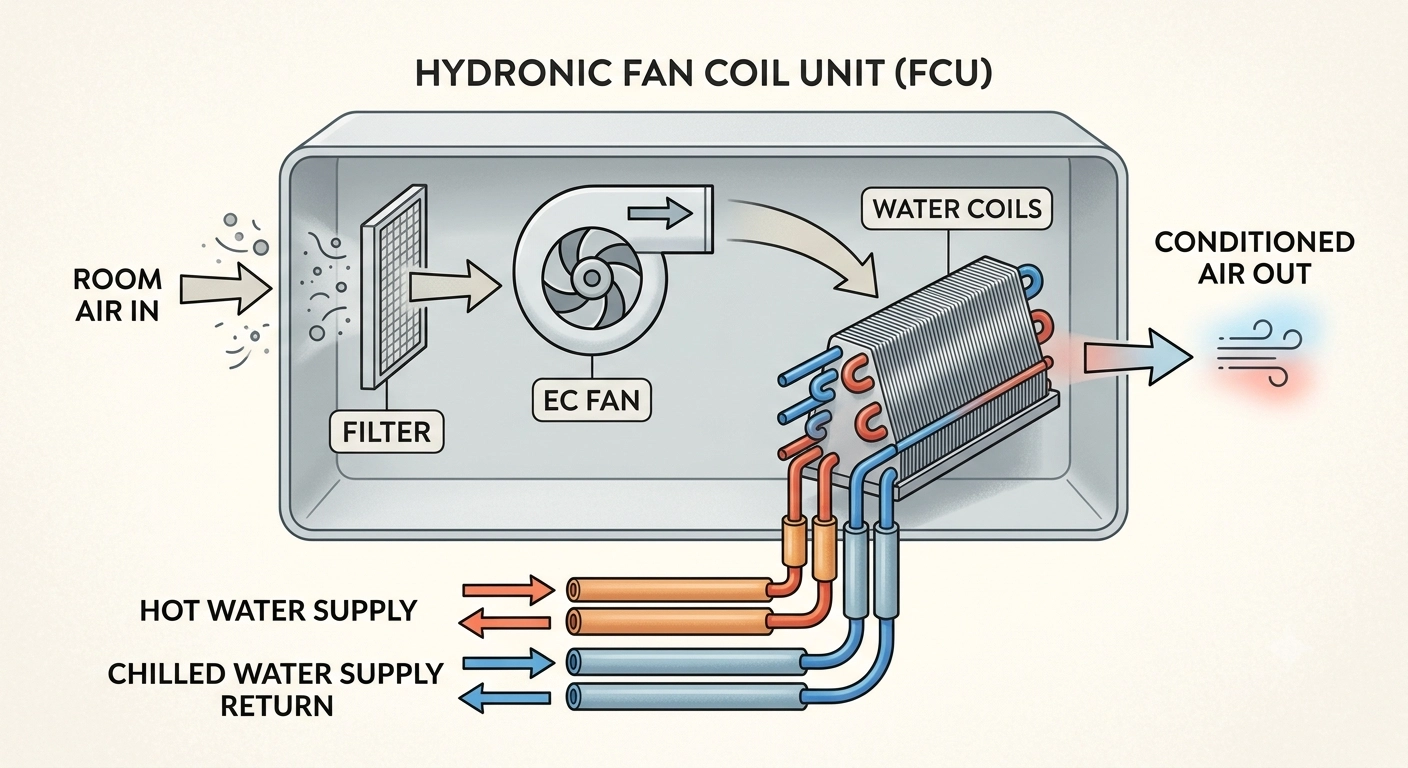
- Air intake: A built-in, whisper-quiet fan draws air from your living space, filters it, and passes it across a set of water coils.
- Thermal exchange: After having been pulled in, air then circulates around coils where either hot or chilled water runs through them. In winter months, heat will be released by the water onto the air, whereas in summertime it will absorb heat directly from the air into chilled water.
- Conditioned distribution: Finally, the freshly-heated or -cooled air is pushed out of the fan coil unit to gently cycle back around your interior environment to provide maximum comfort conditions throughout the house.
Key Components
- Water Coils (Heat Exchanger): High efficiency copper or aluminum coils engineered to optimize heat transfer rates with circulating water.
- Variable-Speed EC Fan/Blower: Electronically Commutated (EC) motors capable of varying speed outputs dependent upon thermal demands, using up to 70% less power than standard AC motors.
- Condensation Drain Pan: Pitched collection pan underneath the coil to collect condensation caused by removal of moisture from humidified indoor air when operating in cooling modes.
- Integrated Thermostat & Zone Controls: Smart controllers responsible for regulating water valve positions and blower motor speeds, offering granular level of control over individual room temperature regimes.
Dual Functionality
The key here is that this one hydronic fan coil unit can provide you with dynamic year-round climate control.
During cold winter months, hot water from your heat pump or boiler runs through the coil to provide heating for your living space. Come summer, however, when things get hot, the system switches over to being fed by chilled water, allowing the exact same fan coil unit to cool and dehumidify your home.
If you live in Kashmir, check out this sophisticated guide to Centralized Geysers and Central Heating Systems for Kashmir Homes.
3. Water vs. Air/Refrigerant: The Efficiency Advantage
Thermal Medium Comparison
By comparison, water is vastly superior to air or gas for transporting thermal energy.
- Volumetric Heat Capacity: Water’s specific heat capacity is about 4x higher than that of air, and its volumetric heat capacity (heat capacity per unit volume) is about 3,000x higher than that of air. So if we just want to carry lots of thermal energy through our system, water can do it with way less pumping.
- Thermal Conductivity: When carrying thermal energy, water will retain it far longer and pass it along far more efficiently than air or refrigerant gases across long distances.
| Thermal Property | Water | Air | Chemical Refrigerant (Gas) |
|---|---|---|---|
| Heat Capacity (Volumetric) | High (~4,184 kJ/m³K) | Extremely Low (~1.2 kJ/m³K) | Low to Medium |
| Pumping / Transport Energy | Low | High (Large Fans Needed) | High (High Compressor Pressure) |
| Thermal Loss Over Distance | Minimal | High | Moderate |
| Environmental Safety | 100% Non-Toxic | Non-Toxic | High Global Warming Potential (GWP) |
Energy Savings
Water's extraordinary efficiency as a thermal conductor makes hydronics a very attractive option for homeowners seeking to reduce their energy bills. Forcing huge volumes of air through big ducts, or using high-pressure refrigerant compressors, uses way more energy than transporting that same amount of heat down slim hydronic pipes.
Hydronic circulator pumps draw just a fraction of the electricity needed by the big furnace blowers they replace.
Environmental & Health Benefits
Traditional Direct Expansion (DX) VRF or mini-split systems circulate synthetic chemical refrigerants (such as R-410A or R-32) directly into bedroom and living area units through long copper lines. Hydronic systems isolate the refrigerant entirely within an outdoor heat pump package or mechanical room. Only clean, safe water circulates inside the home’s living spaces, eliminating indoor refrigerant leak risks and significantly reducing total environmental impact.
4. Integration with Hydrowarm Systems
Pairing with Heat Pumps
Modern air-to-water and geothermal heat pumps are designed to run at maximum efficiency for moderate water temps (usually between 35°C to 45°C or 95°F – 113°F). Standard radiator systems however must be supplied with very hot water (~60°C+), which forces your heat pump to work much harder than normal, and lowers its efficiency.
Hydronic fan coil units feature forced convection coils designed specifically to deliver maximum thermal output using lower supply water temperatures, serving as the ideal partner for air-to-water heat pump technology.
Boiler Synergy
Hydronic FCUs are ideal for ultra-cold climates that experience dramatic temperature changes during extreme winters. Hydronic systems will seamlessly integrate with high-efficiency condensing gas or biomass boilers.
The system will then modulate your water temperatures automatically based on your outside weather conditions.
Whole-Home Eco-System
Our highest performance configuration includes both underfloor radiant heating systems (for base-level heating loads) as well as hydronic fan coil units to provide quick temperature changes due to sudden weather shifts and complete cooling and dehumidification capacity for all of summer!
If you are interested in knowing more about types of Central Heating Systems for your home, check out this guide on Types of Central Heating Systems for Home.
5. Key Advantages for Homeowners & Architects
Whisper-Quiet Operation
There are also now very efficient fans available that produce noise levels at around 20-25dB(A) — approximately the same level as a quiet whisper or rustling leaves.
Forced air systems suffer from noisiness due to air turbulence, but with hydronic fan coil unit technology we’re able to achieve nearly silent operation.
Precision Zone Control
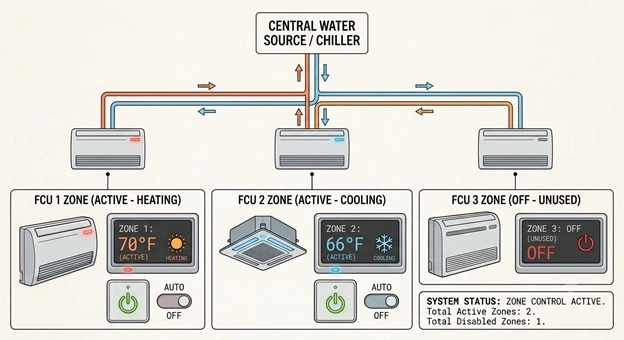
With hydronic fan coil systems, you can independently manage temperature settings for every individual room/zone with individual smart thermostats that modulate both the flow of water to and speed of your fans within certain areas. Unoccupied space will consume 0% unnecessary energy.
Architectural Freedom
Versatile Mounting Options for Luxury Interiors:
- Wall-Mounted Hydronic Fan Coil Units: These slim, low-profile units resemble high-end modern art or are often designed as sleek “split” units.
- Concealed (Ceiling Cassette/Ducted) Hydronic Fan Coil Units: Entirely hidden behind dropped ceilings with minimalistic flush mount supply grilles being the only thing that shows.
- Floor-Standing/Perimeter Console: Ultra-thin units mounted on perimeter walls or under floor-to-ceiling glass windows.
Improved Indoor Air Quality (IAQ)
Forced air furnaces use high-velocity blowers which stir up dust, pet dander, and various allergens through your whole house.
Hydronic FCUs provide gentler localized air flow combined with multi-stage filtration for superior capture of microscopic particles from your home's indoor air.
6. Conclusion
Meet our hydronic fan coil unit (FCU), which harnesses the unmatched thermal properties of water to deliver superior comfort, quiet operation, and energy efficiency all-in-one.
With hydronic FCUs, you can unite top-tier heating and cooling performance with ultra-quiet operation within one compact eco-friendly system that maximizes both energy savings and indoor environment quality while supporting clean architectural designs — an unbeatable advantage whether you’re working as architects, developers, or homeowners looking to build or retrofit their homes for tomorrow today.
Ready to Future-proof your home's climate
control?
Contact our experts at
Hydrowarm to
discuss how we can help
you create the perfect solution with custom hydronic fan
coils, heat pump integration, and more!
You may discover all our products here.
7. Frequently Asked Questions (FAQ)
1) Clean/Replace Air Filter — Every 3-6 Months
2) Check Condensation Drain Line Before Summer Cooling Season For Smooth Drainage
Water Coils remain sealed and require virtually no internal maintenance.


